Window Seat, No Plans: Britain’s Quiet Love Affair With the Pointless Day Return
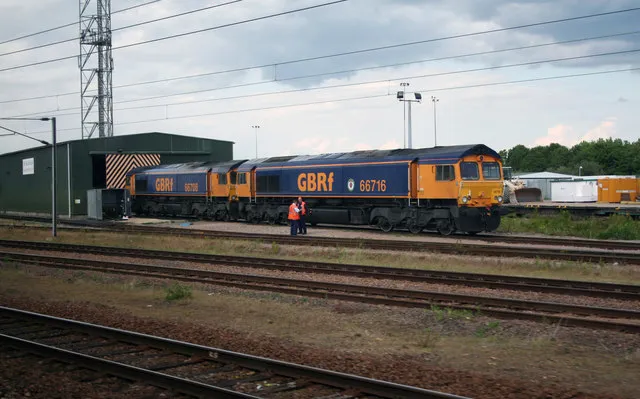
Photo: roger geach , CC BY-SA 2.0, via Wikimedia Commons
There is a particular kind of freedom in standing at a station ticket machine on a grey Saturday morning and choosing a destination almost at random. Not because you need to be anywhere. Not because anyone is expecting you. But because the 10:14 is going somewhere, and you have nowhere better to be.
That, in essence, is the destination-free day return: an off-peak ticket to an unremarkable town, a seat by the window, a book you might actually finish, and a return journey before the light goes. The town itself may offer little more than a market square, a decent café and a charity shop with a good paperback selection. That is fine. In 2026, the point is increasingly the train itself.
The timetable as an invitation
We are used to thinking of rail travel as a means to an end — the necessary friction between home and somewhere more interesting. But ask anyone who has recently bought a return ticket to a place they had no real business visiting, and a different story emerges. The train has become the event.
Part of this is practical. Off-peak fares make a spontaneous day out feel less like a financial decision and more like a small, permissible luxury. Part of it is cultural. After years of treating every spare hour as something to be optimised, there is a growing appetite for time that is simply spent. A train journey offers exactly that: a stretch of hours in which you are technically in transit, and therefore excused from being productive.
There is also the change of scene, which does not need to be dramatic to count. A different high street, a different river, a different branch line curling through fields — these small displacements are enough to reset the mind. You do not need a cathedral or a castle. A station café with a laminated menu and a view of a car park can do a surprising amount of good.
Why the journey is winning
The case for the pointless day return is not that destinations are overrated. It is that the journey has been underrated for too long. On a train, you are held in a gentle interval. You cannot tidy the kitchen. You cannot answer emails quite as easily as you pretend. You can read, stare out of the window, drink a flask of tea and watch the backs of houses give way to allotments, then rivers, then hills.
There is a particular pleasure in the rhythm of it: the clatter over points, the brief theatre of a station announcement, the way a familiar route becomes unfamiliar when you are not driving it. Passengers who commute know the line as an obstacle course. Leisure travellers get to see it as a landscape.
And then there is the destination itself, which is allowed to be ordinary. Britain is full of towns that are not on anyone’s must-see list but are perfectly pleasant for an hour or two. A market, a bakery, a canal path, a second-hand bookshop, a pub that does a good sandwich. The pleasure is modest and specific, which is often the best kind.
How to do it well
The first rule is to protect the day from over-planning. Choose a route with a view, check that the return trains are sensible, and then leave the rest alone. Off-peak tickets are your friend; they keep the cost low and the decision flexible. A flask, a paperback and a charged phone are enough. A small snack is useful, though the station shop is part of the ritual too.
Some routes lend themselves to the format more than others. The Hope Valley line between Manchester and Sheffield offers exactly the right mix of scenery and short-hop possibility. The Exeter to Barnstaple line rolls through Devon countryside with a pace that feels deliberately old-fashioned. The Cambrian Coast is a full day out, but the principle holds: pick a line, not a list of attractions. Even a modest suburban branch can feel like a mini-break if you sit on the right side and resist the urge to check your phone every four minutes.
It helps to get off at the end of the line, walk for twenty minutes, buy something small from a local shop and get back on. That is not a wasted journey. It is a transaction with a place, however fleeting. The local economy gets a few pounds, and you get the peculiar satisfaction of having been somewhere without making a fuss about it.
The etiquette of going nowhere
The destination-free day return works best when it stays quiet. There is no need to announce your purpose to the ticket inspector, and no need to treat a small town as a stage set for your own main-character moment. Be a good guest. Buy a coffee. Ask for directions. Do not block the aisle with a rucksack the size of a small wardrobe.
It is also worth remembering that not every journey needs a lesson. You do not have to come back with a story about a hidden gem or a life-changing pastry. Sometimes the report is simply: the train was on time, the window seat was free, and the light over the fields was very good.
By the time the return train pulls in, the afternoon has usually done its work. The mind is a little quieter. The week feels a little further away. You arrive home with nothing to show for the day except a clearer head and perhaps a second-hand book you did not need. That is the whole offer, and it is enough.
In a culture that likes its leisure to look like achievement, the pointless day return is a small act of resistance. Buy the ticket. Take the window seat. Go nowhere in particular. Come back.