Please Be Seated: The Unwritten Rules of Britain’s Best Viewpoints
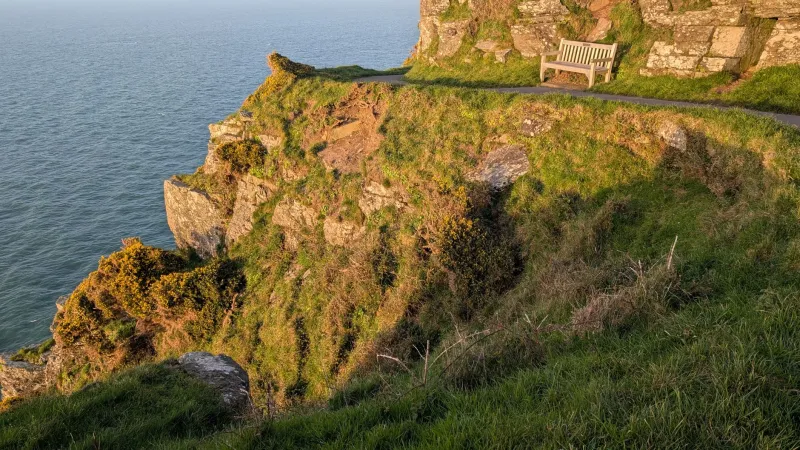
There is a particular kind of British satisfaction in arriving somewhere and finding that someone, years ago, thought to put a bench there. Not a plastic picnic table. Not a concrete ledge. A proper bench, angled just so, with a plaque that says more about a person than most biographies manage in 300 pages. You sit down. You look out. You feel, briefly, that the world has been arranged correctly.
This is not a niche hobby so much as a national habit we rarely name. We plan walks around them, detour through parks for them, and judge a seaside town by whether its promenade seating understands the assignment. The bench is the quiet infrastructure of a good day out — and the plaque is the plot twist.
The bench as a destination
Britain is unusually good at the viewpoint bench. Coastal paths are dotted with them, often facing exactly the right bit of sea. Hilltops have them, sometimes bolted down against the wind. Town squares have them too, positioned for people-watching rather than panorama. The best ones do a simple job: they make you stop. In a culture that increasingly measures a walk by step count, that is quietly radical.
What makes a bench worth seeking out is rarely the bench itself. It is the pairing. A bench above a harbour works because of the boats. A bench on the edge of a village green works because of the dog walkers and the church clock. A bench halfway up a hill works because you have earned it and your legs are grateful. The view does the heavy lifting; the bench simply gives you permission to enjoy it for longer than 30 seconds.
That is why “bench with a view” has become a useful search term in its own right. People want the spot, not just the walk. They want somewhere to sit with a flask, a sausage roll and a slightly self-conscious sense that they are doing leisure properly.
What separates a good bench from a great one
A truly good public bench is a small piece of design. It faces the right way. It has a backrest at a humane angle. It is tall enough that your knees don’t protest, low enough that you don’t need a ladder. Armrests help. A bit of shelter helps more. And the ground around it matters: a muddy puddle at the foot of a bench can undo years of civic goodwill.
The setting is the other half. A great bench has what you might call approach and retreat. You can get to it without scrambling over a hedge, and you can leave without feeling you are interrupting a private gathering. It should feel like part of the place, not an afterthought bolted to a wall.
Then there is the coffee question. A bench within a five-minute walk of a decent café is a different proposition from one that requires a full expedition. The British day out has quietly reorganised itself around this logic: walk, bench, flat white, home. The bench is the hinge.
Plaques, and the stories they keep
Memorial benches are everywhere once you start noticing them. Some plaques are formal. Some are funny. Some are devastating in a single line. “In loving memory of…” is the standard opening, but the details are where the character lives: a favourite view, a preferred football team, a warning not to feed the pigeons.
There is an etiquette to reading them. A quick glance is fine. Staring while someone else is sitting there is not. And it is worth remembering that a memorial bench is not a museum exhibit; it is a seat that happens to carry a story. The best response is usually to sit, enjoy the view and leave the plaque in peace.
What these plaques do, collectively, is turn ordinary viewpoints into a loose map of local affection. They tell you which bit of coast someone loved, which corner of a park mattered, which hill was worth the climb. They are small, free, hyper-local biographies — and they make a walk feel less anonymous.
The unwritten rules of sharing a bench
Bench etiquette in Britain is mostly about not making a thing of it. If there is space, share. If there isn’t, don’t hover like a gull. A brief nod is usually enough. A full conversation is optional and should be taken as a bonus, not a right.
Do not colonise the whole bench with bags, coats and a picnic for six unless it is genuinely quiet. Do not play music out loud. Do not leave your coffee cup behind because “someone will get it”. And if you arrive at a bench with a plaque and find someone already sitting there, perhaps looking thoughtful, consider walking the extra five minutes to the next one. There is usually a next one.
The reward for this low-level considerateness is that benches remain genuinely public: places where a teenager, a dog walker, a couple and a lone reader can all exist without anyone having to justify themselves.
How to find the good ones
Start with the obvious: coastal paths, country parks, canal towpaths and any hill with a trig point. Ordnance Survey maps mark some seats, but local knowledge is better. Ask in a café. Look for the worn patches on the grass. Follow the people carrying flasks.
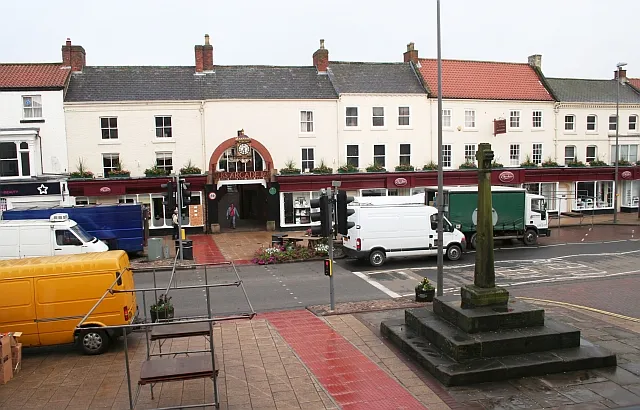
Town benches are underrated, too. A square with a decent bench, a bit of shade and a bakery nearby can be a better hour out than a mediocre attraction. The point is not to chase the perfect view. It is to notice where a view has been made sit-able — and to accept the invitation.
Because the real appeal of the viewpoint bench is not the bench at all. It is the pause. It is the small, civilised agreement that some things are worth looking at for longer than it takes to take a photo. Britain has thousands of these agreements, nailed to a bit of wood, facing the sea. All you have to do is sit down.