Small Rooms, Big Curiosities: A Field Guide to Britain’s One-Room Museums
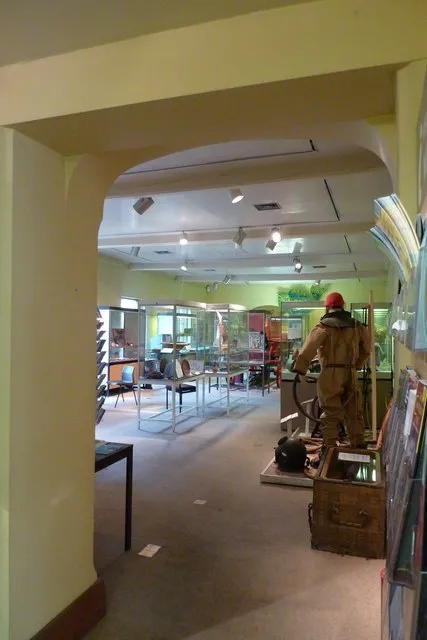
Photo: pam fray, CC BY-SA 2.0, via Wikimedia Commons
Britain is very good at the grand cultural day out. The vast national museum, the stately home, the cathedral with a gift shop the size of a small department store. All excellent. But there is another kind of cultural space having a quiet moment in 2026, and it is often no bigger than a living room.
We are talking about one-room museums, local archives, parish collections, industrial remnants and tiny independent museums run by volunteers with encyclopaedic knowledge and a biscuit tin for donations. These places do not have blockbuster exhibitions. They have a taxidermy fox, a handwritten label about a flood in 1897, a cabinet of Roman nails and a steward called Margaret who knows exactly which cupboard the good photographs are in. And that is precisely the appeal.
Why small is having a moment
Modern attention spans are not broken; they are just heavily contested. A free hour is a real currency in 2026, and a museum that takes 45 minutes to see entirely is an attractive proposition. You do not need to pack a day bag. You do not need to strategise. You can arrive, look properly, ask a question and leave before your parking runs out.
There is also something refreshing about a cultural space that does not try to overwhelm you. Big museums can be wonderful, but they are also tiring. There is a reason so many people end up in the cafe after two rooms. A tiny museum removes the pressure of the full sweep. You can see everything, and still leave with a question. That is a very good ratio.
The charm is in the constraint
One room forces focus. With only a few cases and a handful of objects, you start to notice details you might otherwise skip: the wonky handwriting on a label, the way a local map has been annotated, the fact that someone has clearly spent months researching a single street. Tiny museums are often deeply personal. They are curated by people who live nearby and care about the place in a way that no audio guide can replicate.
They are also pleasantly unpredictable. You might find a display about a Victorian circus, a collection of lawnmower engines, a corner devoted to a forgotten local poet or a glass cabinet of wedding dresses with no apparent connecting theme. That randomness is part of the fun. It rewards curiosity over polish.
A field guide: how to find your local micro-museum
The good ones do not always shout. Here is a practical template for finding the quirky, under-the-radar cultural gems on your own doorstep.
-
Start with the place name. Search your town or village plus ‘museum’, ‘archive’, ‘heritage centre’ and ‘local history’. Then try the same with ‘collection’ and ‘exhibition’. The best results often hide on page two.
-
Check the local council and library websites. Councils often list small heritage venues that do not have much of an online presence. Libraries frequently host local history displays or keep leaflets for nearby archives.
-
Follow the volunteers. Parish newsletters, church noticeboards, civic society pages and community Facebook groups are goldmines. Tiny museums are usually run by people who know other people who run other tiny museums.
-
Check opening hours twice. A one-room museum may open only on Tuesdays and the first Saturday of the month, or only when a volunteer is available. Do not assume. A quick phone call or email is worth it.
-
Bring cash for the donation box. Many of these places run on goodwill, and a few pounds genuinely helps. If there is a guidebook or a postcard, buy one. It is the cheapest cultural patronage you will ever practise.
-
Ask one question. The person behind the desk is often the best part of the visit. Ask what their favourite object is, or what they wish more people knew about the collection. You will usually get a better story than any label.
Six tiny-space types worth seeking out
- The village archive: often a room above a library or in a converted chapel, full of photographs, maps and family histories.
- The single-subject museum: a collection devoted to one thing — clocks, fans, lawnmowers, railway signalling — usually assembled by an enthusiast with serious dedication.
- The house museum: a preserved home, sometimes tiny, where the intimacy of the rooms is the point.
- The industrial remnant: a preserved workshop, pump house or mill corner that tells a very local story of work and invention.
- The university collection: smaller than a public museum, often stranger, and frequently free.
- The church corner: a display of local artefacts at the back of a parish church, usually with a handwritten sign and a very good view of the font.
A template for a micro-museum afternoon
Pick one small venue, then build a gentle afternoon around it. Check the bus or train route, or plan a short walk. Pair the visit with a cafe, a secondhand bookshop or a park. Give the museum 45 minutes to an hour, and do not rush the bits in between. The best tiny museum days are not grand days out; they are local days out.
If you are travelling, look for micro-museums as a way to understand a place rather than simply photograph it. A one-room museum in a seaside town will often tell you more about the town’s real texture than a generic attraction ever could. It will also give you something to talk about on the journey home.
The case for keeping them small
Not every cultural space needs to scale up. The charm of Britain’s tiniest museums is that they remain stubbornly local, slightly eccentric and entirely human. They suit the way we actually live now: in short windows of time, with a hunger for something real and a reluctance to spend a whole day doing it.
So next time you have a free hour, do not default to the big place with the big shop. Look for the small room with the handwritten label. It may be the most interesting thing you see all month.