The Roadside Ledger: What Britain’s Unmanned Stalls Say About Us
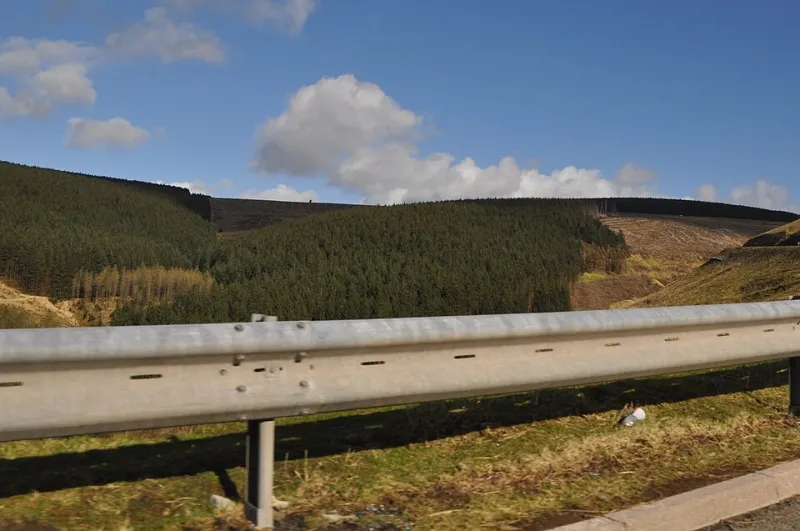
Photo: Lewis Clarke , CC BY-SA 2.0, via Wikimedia Commons
On a narrow lane outside St Just, a wooden shed holds half a dozen eggs, a few jars of marmalade and a tin with a handwritten sign: ‘£2.50 a half dozen. Please shut the gate.’ There is no camera, no card reader and no one behind a counter. The transaction relies on a stranger doing the decent thing. In 2026, this is not a quaint exception. It is a growing part of how Britain buys small things.
Honesty boxes have been part of the rural landscape for generations, but something has shifted. They are appearing on more roadsides, in more forms, and for more reasons than the old tray-of-eggs model suggests. You will find them selling flowers in Norfolk, books in Powys, firewood in the Scottish Borders, brownies in suburban Cheshire and pottery in a Somerset lay-by. The format is simple; the culture around it is not.
A low-tech answer to a high-friction year
Most retail in 2026 is designed to remove human contact: tap, scan, collect, leave. The honesty box does the opposite. It puts a small, deliberate pause into the day. You choose, you count your coins, you write nothing down unless you want to. The producer trusts you; you trust that the eggs are fresh and the price is fair. It is commerce stripped back to a handshake, minus the handshake.
That low friction is exactly the point. For small growers and makers, an unmanned stall is a way to sell without paying platform fees, staffing a shop or committing to market days. For customers, it is a chance to buy something local without a queue, a parking app or a loyalty scheme. In a year when many people are trying to spend more carefully and more locally, the honesty box offers a modest but satisfying exchange: real food, real craft, real trust, no theatre.
A design language of its own
The honesty box has its own visual grammar. In Cornwall, it often looks improvised: painted plywood, a clove hitch of string, a chalkboard that has been rewritten in the rain. In the Scottish Borders, the stalls tend to be sturdier — polytunnel offcuts, a proper latch, jam jars arranged like a small shop display. In the Yorkshire Dales, you might find a converted fridge keeping milk cool beside a tin for notes. In Norfolk, a flower stall can be as simple as a mirror, a bucket and a sign saying ‘bouquets £5’.
None of this is accidental. The best boxes are designed to answer unspoken questions. Is it clear what you are buying? Is the price obvious? Can you pay without hunting for a pen? Is the gate easy to close? The stall is the shopfront, the tin is the till and the road is the high street. The design has to work in all weathers and for all kinds of people, including the ones who are just passing through.
The unwritten rules of the roadside
The etiquette is rarely written down, but it is widely understood. Take what you need, pay what you owe, and leave the box as you found it. Exact change is appreciated. Haggling is not. If there is a guestbook, sign it; if there is a gate, shut it. Dog walkers know to keep leads short. Cyclists know not to block the lane. Parents know that a child holding a £1 coin is part of the ritual.
There is a small theatre of civility to the whole thing. You are not being watched, which is precisely why it works. The box asks you to behave as if your neighbour can see you, even when no one can. Most people do. That is the quiet miracle of the model: it treats trust as normal, and most of the time it is proved right.
What it reveals about Britain in 2026
Honesty boxes are not a replacement for supermarkets, and they are not trying to be. They sit in the gaps: the lane between villages, the edge of a farm, the front garden of someone who makes very good cake. But their growth says something about the mood. People want fewer intermediaries, shorter supply chains and small moments of human contact that do not require a booking. They also want to feel like adults, trusted to do the right thing.
For producers, the box is a low-risk way to test a product, reduce waste and meet neighbours. For customers, it is a reminder that convenience does not have to feel corporate. The honesty box is not naive; it is a calculated bet on people. Occasionally the bet fails — a tin goes missing, a jar is taken unpaid — but most boxes endure. The maths of trust usually works out.
A field guide, roughly
Cornwall favours eggs, flowers and cream teas, often with a hand-painted sign and a sense that the gate has been there since before you were born. The Scottish Borders goes for logs, jam and knitwear, with a sturdy honesty box that looks like it could survive a gale. The Yorkshire Dales does milk, cakes and bird seed with brisk efficiency. Wales has a soft spot for secondhand books and garden plants. The common thread is not the product but the tone: modest, local, slightly self-effacing.
If you stop, stop properly. Pull off the road, leave room for tractors, and do not treat the stall as a photo opportunity. Buy something or move on. And if the sign says ‘please shut the gate’, treat that as a legal document.
The honesty box is a small thing, but it is not a minor one. It is a live rehearsal for a kinder kind of commerce: slower, smaller, more trusting. In 2026, that feels less like nostalgia than a quiet upgrade.