Proof of Life: Why Britain Is Keeping the Little Bits of a Very Good Day

Photo: Sheila Sund from Salem, United States, CC BY 2.0, via Wikimedia Commons
The coat-pocket time machine
There is a particular kind of quiet that arrives when you pull on a winter coat in November and find a crumpled receipt in the pocket. It is rarely for anything grand. A flat white and a cinnamon bun. A paperback from a charity shop. Two pounds forty for a locker at a station you barely remember using. And yet the little scrap of paper does something a camera roll rarely manages: it takes you straight back, without asking permission.
This is the quiet rise of everyday ephemera — the till roll, the ticket, the gallery stub, the beer mat with a date scribbled on the back. None of it is designed to be kept. That is precisely the point. In a culture that curates almost everything before it is allowed to count, the receipt is an accidental artefact. It is proof of life, unpolished and oddly honest.
The anti-algorithm artefact
Social posts are edited. Even the casual ones are chosen, framed, filtered and captioned. A receipt has no such ambitions. It records what happened in the flat language of commerce: time, date, item, total. It does not care whether the day looked good online. It only knows that you were there.
That is the strange comfort of the paper trail. A train ticket to a seaside town you visited on a whim is not a lifestyle statement. It is a small, specific fact. A gallery stub from a rainy Saturday afternoon says more about the texture of a day than a hundred perfectly lit photographs. The receipt is the anti-algorithm artefact: ugly, incidental, and therefore true.
Britain has always had a soft spot for this kind of domestic archive. We are a nation of kitchen drawers, pinboards and under-bed shoeboxes. The habit is not new. What feels different is the way it is being reclaimed — not as sentimental clutter, but as a gentle counterweight to the frictionless digital life.
A shoebox is a search engine with better lighting
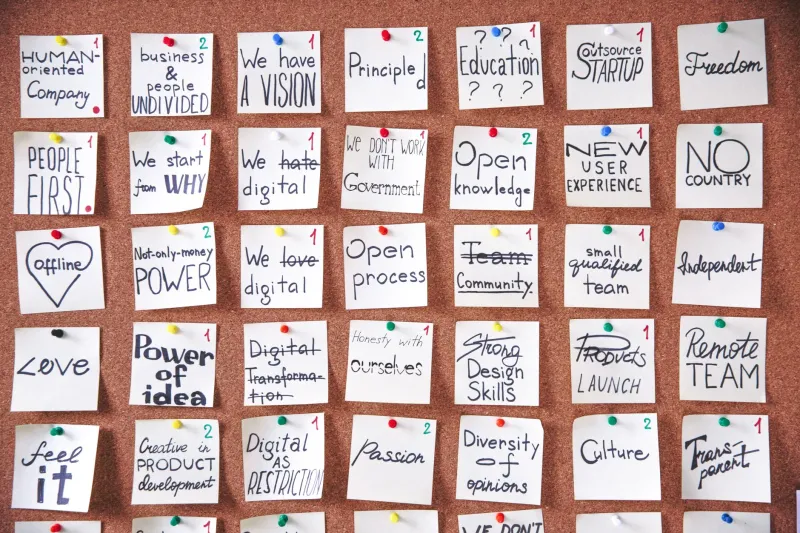
The rituals are small and mostly unspoken. You fold the ticket rather than bin it. You pin the postcard to the board above the desk. You let the receipt live in the coat pocketuntil it becomes a kind of accidental time capsule. Nobody calls this archiving. It is just something people do.
And yet it adds up. The shoebox under the bed is a search engine with better lighting. It does not rank results by engagement. It simply holds the evidence: the cinema stub from a first date, the boarding pass from a trip that changed your mind about something, the hand-written till receipt from a bakery that has since closed. These are not grand historical documents. They are the paper equivalent of a favourite song coming on shuffle.
The British domestic archive has its own geography. The kitchen drawer is for the recent stuff — receipts, takeaway menus, a stray library slip. The pinboard is for the things you want to see without looking for them. The box is for the things you are not ready to sort. It is a system built on avoidance and affection in equal measure, which is probably why it works.
The digital receipt problem
Then there is the email receipt. It arrives, it sits in a promotions tab, and it is forgotten before the kettle boils. Digital receipts are efficient, searchable and almost entirely without atmosphere. You do not find an email in a coat pocket six months later. You do not pin a PDF to a corkboard. The screen flattens the object into data, and data rarely makes you pause.
This is not a plea to refuse the digital receipt. Nobody needs a paper trail for a monthly broadband bill. But it does explain why the physical scrap persists. When a barista asks if you want the receipt, the answer is often no — until you get home and realise you rather wish you had said yes. The paper version has weight. It creases. It survives the wash. It turns up in the bottom of a bag like a message from a previous version of yourself.
Some of this is practical. Paper is easy to keep without deciding to keep it. It slips into a book, a wallet, a pocket. It does not require a folder structure or a cloud account. It simply accumulates, and in accumulating it becomes a record.
Small rituals, softly kept
The keeping is rarely precious. This is not scrapbooking with a colour scheme. It is the beer mat from a good pub quiz, the ticket from a gig you almost skipped, the pressed leaf from a walk that went on longer than planned. The items are disposable by design, which makes their survival feel like a small act of stubbornness.
There is a British modesty to the whole thing. We are not a nation that readily calls a shoebox a memory palace. We are more likely to call it a mess. But the mess is doing something useful. It is holding the ordinary days steady, the ones that never make it into a photo album because nothing photogenic happened. A receipt for a sandwich eaten on a bench in the sunshine can be enough. A ticket stub from a train journey where you watched the fields go by and felt briefly alright about everything can be more than enough.
Why the little bits matter
The souvenir industry would have us believe that memories come in gift shops, printed with the name of the place and priced at nine ninety-nine. But the best souvenirs are often the ones nobody meant to make. They are the paper trail of a life lived at normal speed: uncurated, unposted and quietly kept.
So the next time a receipt is offered, take it. Fold it once, put it in your pocket, and let it do its slow work. Britain is already keeping the little bits of a very good day. It turns out the shoebox was a memory palace all along.