Pinned, Not Posted: The Quiet Pull of Britain’s Corkboard Culture
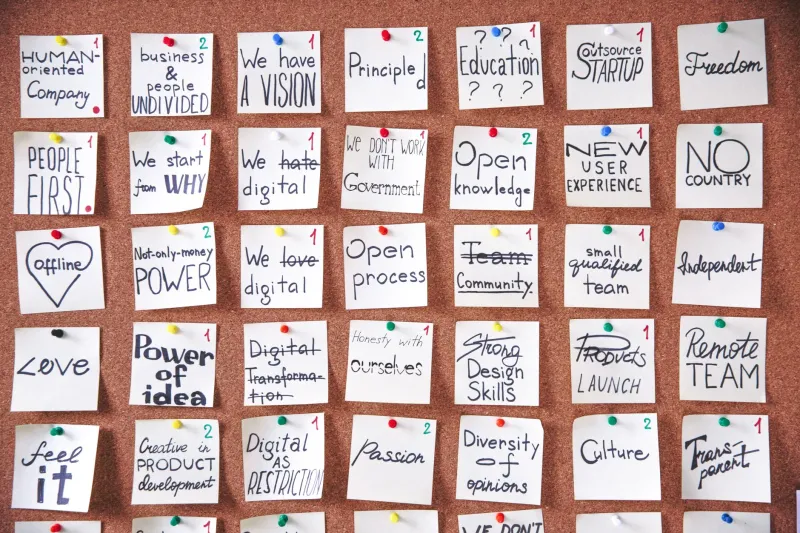
On a damp Tuesday in November, the noticeboard outside a south London library is doing more work than most apps. There’s a faded poster for a choir that met last spring, a bright orange card advertising beginner Spanish, a tear-off tab for a lost cat called Bernard, and a handwritten note offering “two good chairs, free, you collect.” It is messy, contradictory and entirely without a scroll bar. It is also, somehow, the most honest social network left in Britain.
The feed you have to walk to
Noticeboards have never really gone away. They have simply been ignored by anyone who assumed the internet had replaced them. But walk past a church hall, a corner shop, a community centre or a railway station in 2026 and you’ll see the evidence: paper, pins, tape, hope. These are hyperlocal feeds with no algorithm, no engagement metrics and no incentive to keep you angry. The only way to read them is to leave the house.
That limits their audience, which is precisely the point. A noticeboard cannot follow you home. It cannot notify you at 11pm. It cannot show you an advert for something you mentioned once near your phone. It just stands there, in the rain, waiting for someone to stop.
And people do stop. Not in droves, but steadily — a parent checking for swim lessons, a newcomer looking for a book club, a teenager scanning for babysitting work, a retired man reading the same notice about a residents’ meeting he has already missed twice. The board is a small public square, and everyone is glancing at it from a different angle.
Etiquette, in pin form
The rules are unwritten, which makes them all the more powerful. Ask before you pin. Use drawing pins, not sticky tape, unless the surface is glass. Never cover someone else’s notice, especially not the one about the missing cat. Tear-off tabs should be easy to remove, not perforated like a tax form. If your event has passed, take it down. If your event has changed, write the correction by hand rather than printing a whole new poster. The noticeboard rewards effort and punishes laziness, quietly.
There is humour in this etiquette too. A board in Bristol recently featured a flyer for a “silent disco” with the handwritten addition: “Not actually silent. Sorry.” A church hall in Yorkshire advertised a “bring and buy sale” with a small note underneath: “Please bring things. Please buy things. Please don’t just look.” These are not just notices; they are tiny performances of local life, scripted by people with a drawing pin and a sense of proportion.
The accidental archive
Look closely at any busy board and you’ll find layers. A new poster for a yoga class overlays a faded one for a withy weaving workshop. A card for a plumber is stapled to a poster for a school fair from two years ago. The corners curl; the colours bleach. It is an accidental archive of a street’s small ambitions — the classes someone hoped to run, the rooms someone hoped to let, the cats someone hoped to find.
This is where the noticeboard beats the feed. Digital content is dated, ranked and deleted. Corkboard content just sits there, gathering authenticity. The old flyer becomes a historical document. The handwritten correction becomes a story. The notice that says “POSTPONED — NEW DATE TBC” becomes a small monument to optimism.
The people who still pin
There is the retired teacher who volunteers as the library board’s unofficial curator, moving the children’s art to eye level and removing anything that looks like a scam. There is the café owner who lets local makers pin cards by the till, on the condition that they buy a coffee first. There is the community hall volunteer who owns a small tub of drawing pins and a roll of Blu Tack and treats them like emergency supplies. And there is the reader — the person who stops, scans, tears a tab, and maybe turns up to something on a Wednesday evening they would never have found online.
These people are not nostalgists. They are pragmatists. They know that a noticeboard is cheap, accessible and strangely trustworthy. You can see who made the flyer. You can see whether it has been there for a week or a year. You can judge the kerning. It is a low-tech credibility check.
Why now?
The appeal in 2026 is obvious. Digital life is exhausting and increasingly samey. The feed is optimised for attention, not usefulness. The noticeboard is optimised for nothing except the immediate neighbourhood. It is also free — a rare thing in a country where a night out can cost a week’s grocery budget. Pinning a flyer costs nothing. Reading one costs a few seconds. Turning up to the thing it advertises might cost you an evening, but at least you’ll have met someone who lives three streets away.
There is a social contract here too. When you pin a notice, you are saying: I am here, I am doing something, you are welcome. When you read one, you are saying: I am paying attention. That exchange is small and imperfect, but it is real. It is the opposite of a passive scroll.
How to read a noticeboard
Start with the handwritten things. They are usually the most recent and the most human. Check dates — a surprising number of events happened last month. Look for tear-off tabs; they are the original call-to-action. Take a photo if you’re interested, because the board will change. And if you see something that makes you smile, consider pinning your own notice next time. The board is only as good as the people who use it.
Britain’s noticeboards are not a solution to loneliness or the high street’s problems. They are too small, too scruffy and too easily ignored for that. But they are a reminder that local life is still out there, pinned to a wall, waiting for someone to stop. Next time you pass one, stop. The feed is short, but it’s worth reading.