Half-Time, Fully Social: Why the Interval Is Britain’s Best New Bit of the Night
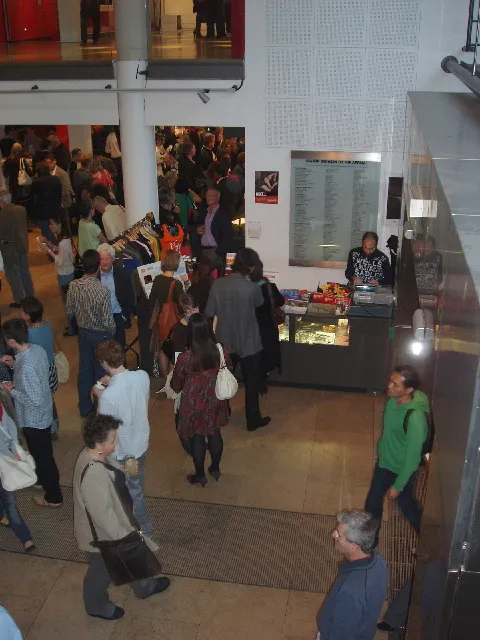
Photo: David Hawgood, CC BY-SA 2.0, via Wikimedia Commons
There is a particular kind of magic in a foyer at 8.47pm. Half the audience is clutching a plastic glass of something white, the other half is debating whether there’s time for an ice cream, and someone near the cloakroom is having the sort of unexpectedly good conversation you only get when nobody has anywhere to be for fifteen minutes. The interval, long treated as a logistical pause — a loo break with a side order of queueing — is having a moment. In 2026, Britain’s theatres, cinemas and comedy venues are quietly redesigning the break as a social ritual in its own right.
It makes sense. We have spent years optimising nights out: booking ahead, ordering ahead, leaving ahead. The result can feel less like an evening and more like a sequence of transactions. The interval interrupts all that. It is short, structured and pleasantly low-stakes. You don’t have to make conversation, but you can. You don’t have to buy a drink, but the bar is right there. And because everyone is in the same holding pattern, the usual British reserve drops by roughly a notch and a half.
The fifteen-minute permission slip
Theatre bars have been the most visible innovators. Pre-order schemes now let you skip the scrum entirely: order before the show, collect at the bell, spend the break talking rather than queuing. Some venues have introduced interval-only menus — small, fast, designed to be eaten standing up — while others have leaned into the foyer as a sort of indoor village green, with longer tables and clearer signage. The message is subtle but clear: this is not dead time. It is the interval.
Cinemas have joined in, too. Independent chains and regional picturehouses are experimenting with longer gaps between adverts and features, or with curated mid-film breaks for longer screenings. Comedy clubs, meanwhile, have always understood that the break is where the night loosens up. The first half is performance; the second half is atmosphere. The interval is the hinge.
What’s changed is the framing. Venues are no longer apologising for the break. They’re programming it. A pre-show email might suggest a drink to order, a nearby pub for the post-show, or a five-minute route to the loos that avoids the main crush. It is hospitality in miniature — and it works because it asks almost nothing of you.
Why a short break feels so good
Part of the appeal is rhythm. A night out with no interval can blur into one long stretch of sitting and watching. A break gives the evening a shape: arrival, first act, pause, second act, home. That shape is oddly comforting. It echoes the way we structure other good things — a meal with a pause between courses, a walk with a bench halfway, a weekend with a proper Sunday morning. The interval is a built-in breath.
There’s a social dimension, too. Britain has quietly become better at small, structured sociability: the five-minute wander, the shop that knows your name, the table for one. The interval fits that pattern. It is not a party. It is a chance to turn to the person next to you and say something about what you’ve just seen. In a culture where we often leave venues in silence, staring at phones, that is a small but real pleasure.
And then there’s the drink. Not the pint itself, necessarily, but the ritual of it: the decision, the order, the slight race against the bell. A mid-show pint has a different flavour to a post-work one. It is not about winding down or kicking on. It is about marking time. You are exactly where you are meant to be, and you have fifteen minutes to enjoy it.
A small field guide to doing the interval well
1. Order before the first act. If the venue offers pre-orders, use them. If not, scope out the bar route during the pre-show loo trip. The goal is not efficiency for its own sake; it’s so you can spend the break actually having one.
2. Sit somewhere new. The interval is a chance to stand up, stretch and reposition. A different corner of the foyer often means a different conversation. The people by the window are usually the ones who know where the good post-show pub is.
3. Ask a small question. “Have you seen this one before?” “Is the ice cream worth it?” “Do you know what time it finishes?” These are not deep questions. They are door-openers. The interval is a low-pressure place to use them.
4. Don’t try to do everything. The break is not long enough for a full meal, a phone call, a cigarette and a catch-up. Pick one thing. A drink and a chat is plenty. A wander round the foyer is plenty. Standing still and watching the room is, honestly, plenty.
5. Let the bell be the bell. The best intervals end with a gentle herd back into the auditorium, not a stampede. If you’re mid-conversation, agree to finish it after. The second half will wait. That’s the whole point.
The bit we didn’t know we needed
In a year when so much of our leisure time is optimised, booked and reviewed, the interval is a rare thing: a scheduled pause that feels unforced. It doesn’t demand that you socialise. It just leaves the door open. You can stand by the bar with your programme, people-watch, or have the kind of meandering chat that rarely happens when everyone is trying to get somewhere.
Britain has always been good at small rituals — the half-time cup of tea, the queue that becomes a conversation, the pub garden that turns a quick drink into an afternoon. The interval revival is another one of those. It is not a revolution. It is a fifteen-minute reminder that a good night out is not just what happens on stage or screen. Sometimes it’s what happens in the foyer, with a plastic glass and nowhere else to be.