Appointment Audio: The Quiet Luxury of Listening on Someone Else’s Clock
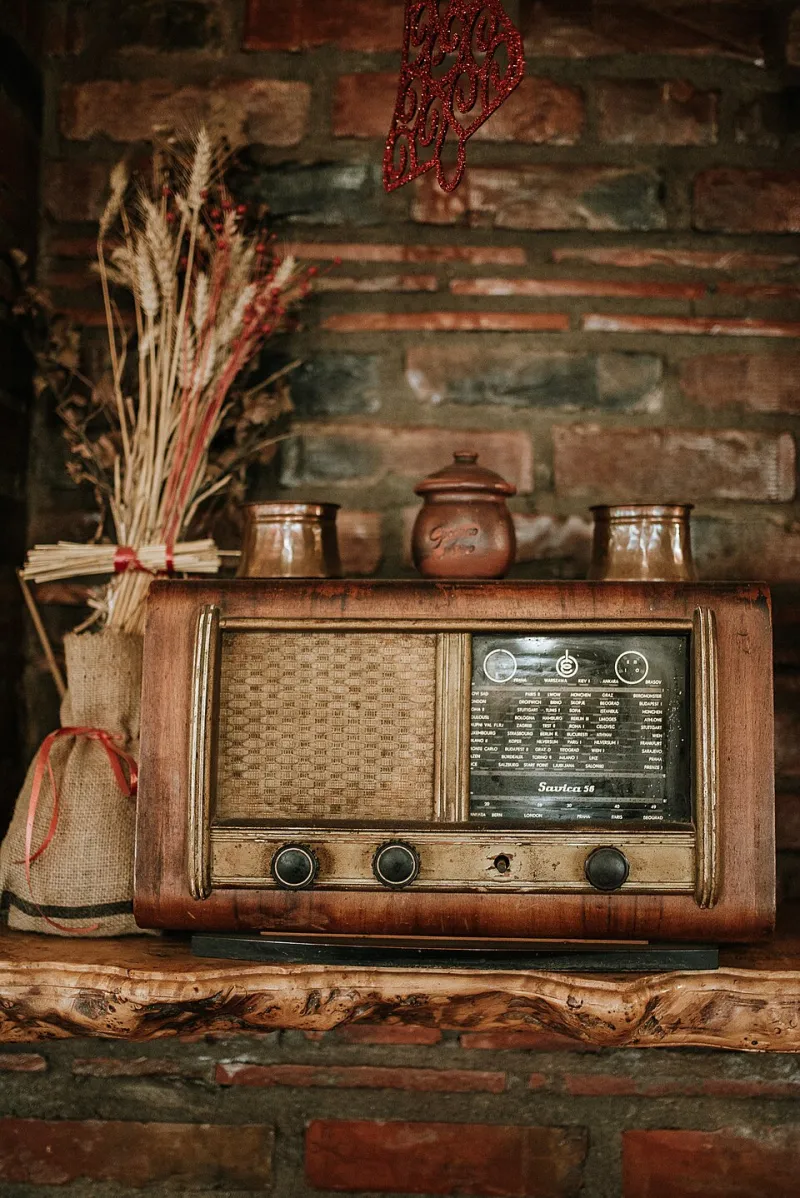
Photo: Shixart1985, CC BY 2.0, via Wikimedia Commons
On a Tuesday evening in 2026, a strange thing is happening in living rooms across Britain: people are arranging to be somewhere at the same time. Not a streaming premiere, not a group chat, not a live football match — a radio show. They know when it starts. They know roughly when it ends. And they have decided, in advance, to be listening.
This is appointment audio, and it is having a moment. After years of on-demand everything, the fixed hour is starting to feel less like a limitation and more like a small luxury.
The strange luxury of a fixed hour
On-demand culture promised us freedom. We could listen to anything, any time, in any order. And mostly, that has been good. But freedom has a hidden cost: the endless small decision of what to play next. Playlists multiply. Podcast queues grow. The algorithm learns what we like and feeds it back to us in ever-tighter loops.
A scheduled radio show asks none of that. It simply says: this is happening now. Here is a voice, a selection, a mood. You can join or not, but if you join, you join on its terms. That is oddly restful. It is the audio equivalent of being cooked for instead of choosing from a menu.
There is also the pleasure of missing things. If you catch a live show, you hear what everyone else hears at the same time. A joke lands in your kitchen and in someone else’s car. A song arrives without warning. A phone-in takes a turn nobody planned. None of it can be skipped, saved or sped up. It is happening, and then it is gone.
Why on-demand made live feel special
For years, live radio was the default. You tuned in because there was no other option. Now that there is every other option, choosing live feels deliberate. It is no longer the background hum of the house; it is a small event.
That shift has changed the way people talk about radio. Local stations, community broadcasters and specialist shows are being treated less like utility services and more like places to meet. Not in a loud, networking way — more like a familiar café where you know the staff will be there and the conversation will be odd but welcome.
The algorithmic feed is brilliant at giving you more of what you already like. Scheduled radio is brilliant at giving you something you did not know you liked. That is a different kind of value, and in 2026 it feels newly precious.
Local radio’s quiet advantage
National shows have their stars, but local radio has something else: texture. A traffic report that actually mentions your road. A presenter who knows the name of the chip shop on the high street. A weather update that sounds like it was written by someone who has stood in the same drizzle as you.
That localness is not nostalgic. It is practical. It makes the listening feel situated. You are not just consuming audio; you are tuning into a place. For readers who have spent the past decade moving between cities or working from home, that sense of situatedness can be a quiet comfort.
Community stations take this further. They are often small, occasionally chaotic and frequently charming. Their schedules are not optimised by a global platform. They are shaped by volunteers, music nerds, local historians and people who simply wanted a show. That is part of the appeal. It feels made by humans, for humans, at a particular time.
Listening as a household ritual
The return of the radio hour is also a household story. In shared flats and family homes, a fixed show can become a small anchor. It gives people something to talk about that is not work, weather or the news. It creates a shared reference point: did you hear that? Did you catch the end?
There is something gently sociable about listening together without talking. You do not have to organise a conversation. You just have to be in the same room, or the same group chat, at the same time. The radio does the rest.
For people who live alone, the effect can be even stronger. A scheduled voice is not the same as company, but it is a rhythm. It marks the hour. It fills the quiet without demanding anything back. That is a particular kind of companionship, and it is easy to underestimate.
The case for keeping the appointment
None of this means on-demand is bad. The point is not to cancel your podcast queue or pretend playlists are a moral failure. The point is that there is room for both. The scheduled hour offers something the feed cannot: a shared moment, a gentle structure, a small surrender of control.
In 2026, that feels like a genuinely modern luxury. Not the luxury of more choice, but the luxury of less. One hour. One station. One voice. You do not have to decide what comes next. You just have to show up — and listen.