Single-Minded: The Quiet Confidence of Britain’s One-Dish Cafés
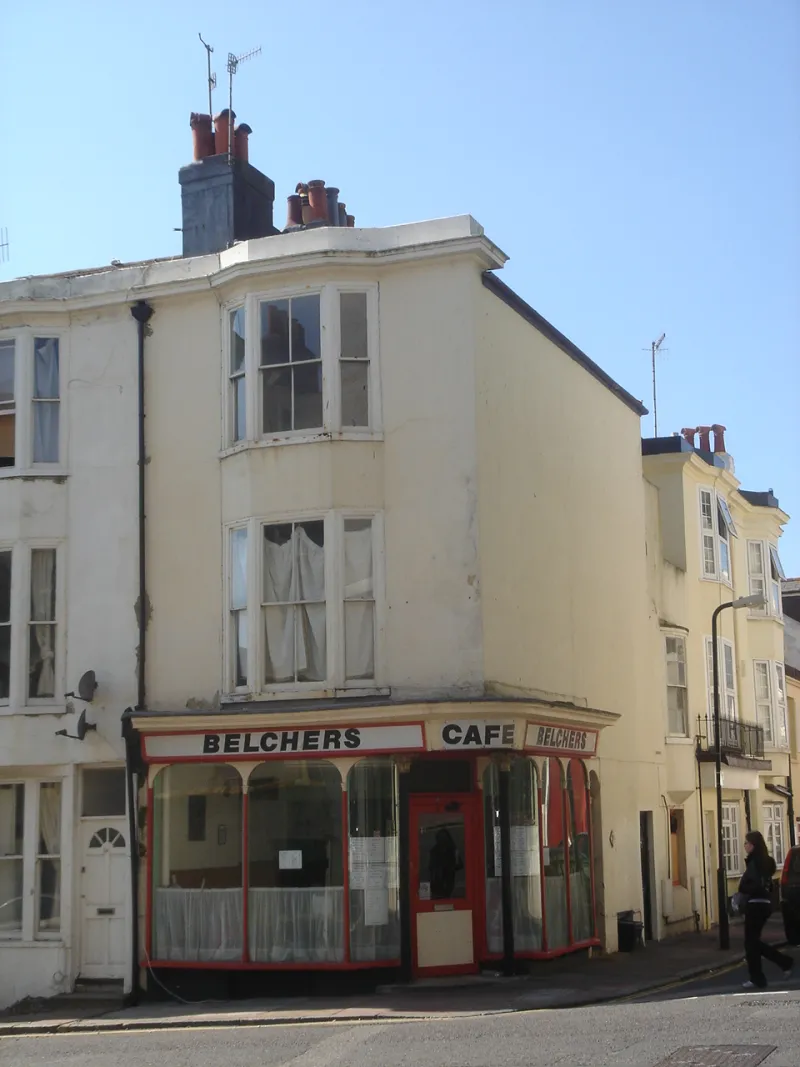
Photo: Hassocks5489, CC0, via Wikimedia Commons
There’s a particular kind of British lunchtime scene that has become quietly familiar. A small room, a chalkboard with a single line on it, and a queue of people who don’t seem remotely bothered that there’s nothing to choose between. You order the thing. You pay. You find a stool. And somewhere between the first bite and the last, you realise that the absence of choice was the point.
This is the one-dish café: a canteen, counter or back-street kitchen that has built its entire personality around a single plate. It might be a lasagne with a crisp-edged top, a sandwich that takes twenty minutes and is worth every one of them, a bowl of dal, a plate of pasta, a pie. The details vary. The principle doesn’t.
The menu is the message
A one-line menu isn’t a gimmick, though it can look like one from the pavement. It’s a statement of intent. When a café tells you it does one thing, it’s also telling you what it values: consistency over variety, craft over range, a short conversation over a long list of maybes. For the customer, that can feel strangely freeing. There’s no agonising. No fear of ordering wrong. No lingering suspicion that the person at the next table got the better deal.
In a culture that has spent years treating choice as an unqualified good, a limited menu reads as confidence. It says: we know why you’re here. And increasingly, in 2026, that’s exactly what people want from a lunch break.
Less choice, more ritual
The rise of the one-dish café is partly a story about time. A 45-minute lunch hour doesn’t need a laminated booklet. It needs a decision made quickly and a plate that arrives before the meeting. But it’s also a story about attention. When a kitchen makes the same dish every day, it gets better at it. The pasta is cooked with a little more precision. The bread is toasted with a little more care. The queue moves because nobody is dithering.
There’s a ritual to it, too. Regulars don’t need to read the board. They know the dish, the price, the person behind the counter. The café becomes a place you go rather than a place you browse. That’s a small thing, but it’s the kind of small thing that turns a street into a neighbourhood.
The canteen DNA
Britain has a long and slightly underrated history of single-dish eating. The pie shop, the baked potato van, the fish and chip counter, the workers’ canteen, the sandwich hatch — all of them understood that a short menu isn’t a lack of ambition. It’s a way of doing one thing properly, at volume, without fuss.
What feels new is the styling. The one-dish café of 2026 is just as likely to have a considered interior, a natural wine list and an Instagram account as it is to have Formica tables and a tea urn. The model is old. The presentation is contemporary. And that combination — canteen practicality with a bit of design confidence — is part of why it has caught on.
The economics of doing one thing
For the people running these places, a narrow menu isn’t just an aesthetic choice. It’s a survival strategy. Fewer ingredients means less waste. Fewer dishes means a smaller kitchen, a simpler rota, a tighter operation. In a hospitality climate where margins are thin and rents are not, doing one thing well can be the difference between a café that lasts and a café that closes.
It also makes the offer easier to explain. A single dish is a story. It travels by word of mouth. Someone says, “They only do one thing, but it’s incredible,” and that’s a more compelling recommendation than a list of twelve decent options. Scarcity, in this context, isn’t a limitation. It’s a marketing department that costs nothing.
The neighbourhood effect
The one-dish café is also a social space by accident. Because the menu is short, the conversation is often longer. You talk to the person next to you about the dish, the queue, the fact that they’ve sold out by two. The staff have time to remember your face. The room is small enough that you notice who else is in it.
That isn’t a small thing in a country where the default lunch is often a meal deal eaten at a desk. A café that gives you one excellent plate and a place to sit is offering something more than food. It’s offering a pause with a bit of shape to it.
What it says about Britain’s appetite
The one-dish café isn’t for everyone. Some people want choice, and there’s nothing wrong with that. But the fact that so many of these places are thriving suggests something about the current mood. We’re less interested in being dazzled by range and more interested in being looked after by focus. We want to trust the kitchen. We want to know what we’re getting.
There’s also a quiet rejection of the idea that more is always better. A short menu is a small act of editing. It says: this is enough. In a year when everything feels like it’s asking for more of our attention, that’s a surprisingly attractive proposition.
The last bite
The best one-dish cafés don’t feel austere. They feel certain. They’ve looked at the vast, exhausting possibility of the modern menu and decided to make one thing, every day, until it’s very good. You queue. You order. You eat. And then you go back to your afternoon a little more settled than you were before.
That isn’t a revolution. It’s just lunch, done with a bit of conviction. And in Britain, in 2026, that might be exactly the point.